Mimic Escape Beginner Guide: Core Mechanics & First Steps
Mimic Escape is a Sokoban-style puzzle game in which you control a cunning Mimic seeking freedom across 60+ hand-crafted levels. This beginner guide covers the fundamental movement rules, push mechanics, and early puzzle-solving strategies you need to survive traps, patrolling guards, and greedy adventurers.
Grid-Based Movement Fundamentals
Every level in Mimic Escape takes place on a tile-based grid. Your Mimic moves one tile at a time in four cardinal directions—up, down, left, and right. There is no diagonal movement, and each input counts as a single step. Because the game follows classic Sokoban conventions, every move you make is deliberate; there is no real-time pressure from a clock, so take the time to plan before committing to a direction.
Walls and obstacles block your path entirely. If a wall occupies the tile you are trying to move into, your Mimic stays in place and the move is not consumed. Understanding which tiles are passable and which are blocked is the first skill every new player must develop, because a single wasted move in later levels can make a puzzle unsolvable.
Most levels also include an undo or restart function, allowing you to step back through your move history or reset the puzzle from scratch. Use these tools liberally while learning—there is no penalty for restarting, and experimenting with different routes is the fastest way to internalize the grid logic.
Push Mechanics and Object Interaction
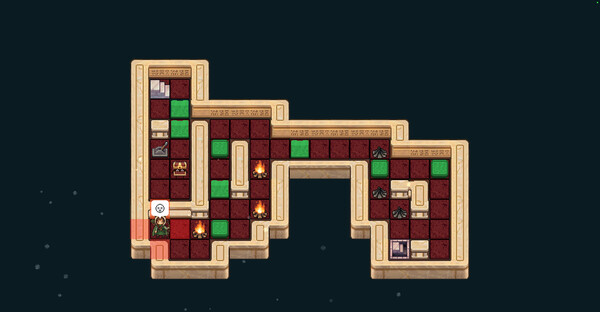
Like all Sokoban-style games, Mimic Escape revolves around pushing objects across the grid. Your Mimic can push a movable object by walking directly into it, which slides the object one tile in the same direction. You can only push—never pull—and you can only move one object at a time. If a second object or a wall sits behind the one you are pushing, the push fails and nothing moves.
Pushable objects often need to reach specific goal tiles to unlock doors, disable traps, or clear your escape route. Pay close attention to corner tiles and edges of the grid: once an object is pushed into a corner or flat against a wall where no further useful movement is possible, it may become permanently stuck. Recognizing these dead-end positions before they happen is one of the most important beginner skills to develop.
Some levels introduce special interactive objects beyond standard crates, such as switches and pressure plates. Pushing an object onto a pressure plate may open a gate elsewhere on the grid, while stepping on a switch yourself can trigger or deactivate traps. Always survey the full level layout before your first move to identify these elements and plan your push sequence accordingly.
Navigating Traps, Guards, and Adventurers
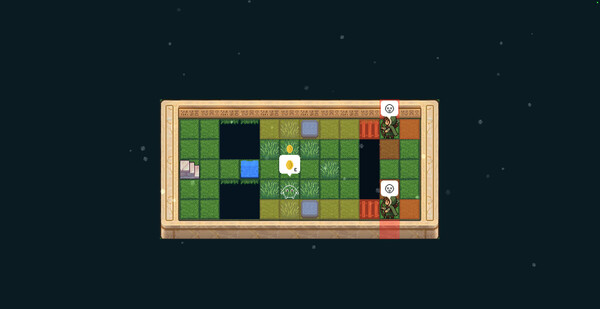
Deadly traps are scattered throughout many levels and will end your run on contact. These include hazards like spike tiles and pitfalls that occupy fixed positions on the grid. Since trap placements never change between attempts, you can memorize their locations and plot safe paths around them. In some cases, pushable objects can be slid onto trap tiles to neutralize them and create a safe crossing.
Patrolling guards follow set movement patterns, advancing along their routes each time you take a step. Because Mimic Escape is turn-based, guards only move when you move. This gives you full control over timing—count out a guard's patrol cycle, wait for the right moment, then move past while the path is clear. If a guard occupies or moves into your tile, the level is failed and must be restarted.
Greedy adventurers pose a unique threat: they are actively hunting your Mimic for the treasure it represents. Unlike guards on fixed patrols, adventurers may react to your position. Use the environment to your advantage by placing obstacles between yourself and pursuing adventurers, or by luring them into dead ends while you slip past toward the exit.
Early Puzzle-Solving Strategies
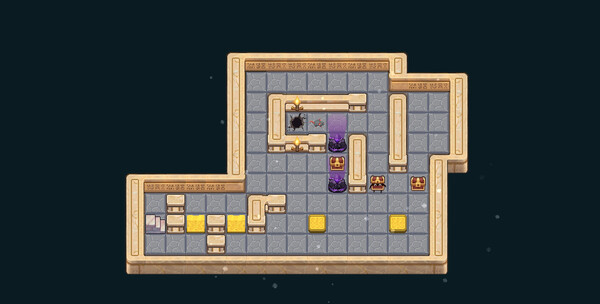
The most reliable beginner strategy is to work backward from the goal. Identify where each object needs to end up, then trace the sequence of pushes required to get it there. This reverse-planning approach prevents you from shoving objects into dead-end positions and helps reveal the correct move order before you commit to any actions.
In the opening levels, puzzles typically involve only one or two movable objects and a straightforward path to the exit. Use these simpler stages to build a habit of scanning the entire grid before moving. Check for traps, note guard patrol routes, locate every pushable object, and identify all goal tiles. This systematic survey becomes essential as puzzle complexity ramps up in later stages.
When you feel stuck, remember that the undo function is your best friend. Step back a few moves rather than restarting the entire level—often the mistake happened only one or two pushes ago. Over time, you will develop an instinct for recognizing which pushes are irreversible and which still leave room for correction, and that instinct is the foundation of mastering Mimic Escape's 60+ levels.
Tips for Your First Ten Levels
Levels in Mimic Escape are designed with a gentle difficulty curve. The first handful of stages introduce one mechanic at a time—basic movement, then pushing, then simple traps, and finally guards. Resist the urge to rush through these tutorials; each one teaches a concept that later levels will combine in more demanding ways.
Keep an eye out for visual and audio cues built into the environment. Tiles that look different from the standard floor often signal interactive elements such as pressure plates or trap triggers. Similarly, guard patrol routes are usually telegraphed by distinct floor markings or directional indicators. Learning to read these signals quickly will save you from trial-and-error restarts as puzzles grow more intricate.