Guards & Enemies: Patrol Patterns, Behavior & How to Evade Them
In Mimic Escape, surviving means understanding every enemy that stands between you and freedom. Each guard and enemy type follows distinct patrol patterns and detection rules, and learning how they behave is the key to plotting your path through all 60+ puzzle levels.
Guard Types & Patrol Patterns
Mimic Escape features several distinct enemy types, each with their own movement behavior on the grid. Standard guards follow fixed patrol routes, walking back and forth along a set path in a predictable loop. Because the game uses Sokoban-style turn-based movement, guards take one step for every step you take, making it possible to count and predict exactly where they will be after any number of moves.
Some guards patrol in simple two-point lines, while others walk rectangular or L-shaped routes, covering more of the level. Advanced levels introduce guards with longer and more complex patrol paths that weave through tight corridors, requiring careful observation before you commit to a route. Take time at the start of each level to watch full patrol cycles before making your first move.
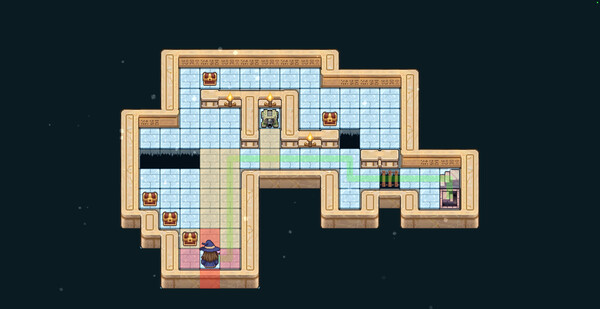
Adventurers: The Greedy Pursuers
Adventurers are a unique threat because, unlike standard patrol guards, they are actively hunting for treasure — and as a Mimic disguised as a chest, you are their target. When an adventurer spots you within their line of sight, they will move toward your position, attempting to reach and capture you. This makes them far less predictable than patrolling guards and forces you to think reactively as well as strategically.
The key to dealing with adventurers is breaking their line of sight. Use walls, pushable crates, and environmental obstacles to stay hidden. Since movement is turn-based, you can bait an adventurer into moving in a specific direction and then slip past while they are committed to their path. In later levels, multiple adventurers may approach from different angles, requiring you to manage several threats simultaneously.
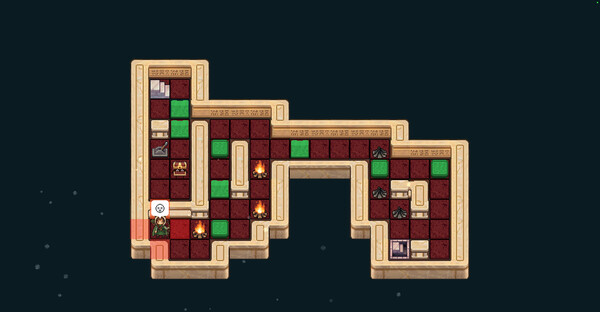
Detection Rules & Line of Sight
Enemies in Mimic Escape generally detect the player through grid-based line-of-sight mechanics. Guards can see in the direction they are currently facing, and their detection range extends in a straight line until blocked by a wall or obstacle. Stepping into a guard's forward vision line during their patrol will trigger a capture, ending the level.
Understanding facing direction is critical. Guards typically face the direction of their next movement step, so you can safely cross behind them or move perpendicular to their patrol path when timed correctly. Some puzzle solutions specifically require you to position yourself in a guard's blind spot for several turns while other elements of the level align in your favor.
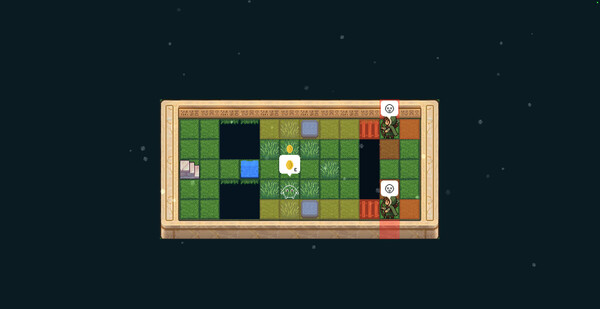
Traps & Environmental Hazards
Beyond mobile enemies, Mimic Escape layers in deadly traps that act as stationary threats on the grid. These can include floor spikes that activate on a timed cycle, pressure plates that trigger when stepped on, and other hazards that restrict which tiles are safe at any given turn. Traps often work in concert with guard patrols, creating narrow timing windows where a path is both trap-free and guard-free.
Learning to read the rhythm of traps alongside guard patrol cycles is what elevates basic Sokoban solving into the strategic depth Mimic Escape is known for. Many levels are designed so that the obvious path is blocked by a trap-and-guard combination, pushing you to find creative detours or to manipulate pushable objects to disable hazards before proceeding.
Evasion Strategies & Advanced Tips
The most reliable evasion strategy is patience. Since every move is turn-based, there is no time pressure — take as many turns as you need to observe patrol loops and trap cycles before committing. Count guard steps to determine exactly when a corridor will be clear, and plan a sequence of moves that gets you through in one uninterrupted chain.
In more complex levels, use the environment to your advantage. Push crates into guard patrol paths to block or redirect their routes, and use objects as cover to break adventurer line of sight. Some puzzles can only be solved by deliberately luring an enemy to a specific tile, so think of guards not just as obstacles but as movable pieces in the puzzle. Mastering this mindset is what separates new players from those who conquer the game's most devious later stages.